
Ultimate Guide to Snake Plant Care, Benefits, and Maintenance
Table of Contents
summary
- Snake plants are one of the easiest and most low-maintenance indoor plants to grow.
- They thrive in bright, indirect light but can also adapt to low-light conditions.
- Overwatering is the most common cause of snake plant problems, so always let the soil dry between waterings.
- Use fast-draining succulent or cactus soil and pots with drainage holes to prevent root rot.
- Snake plants improve indoor aesthetics and may help remove certain airborne pollutants.
- Seasonal care is simple—water less and skip fertilizer during fall and winter.
- Propagation is easy through plant division or leaf cuttings, making it simple to grow new plants.
- Snake plants are ideal for homes, apartments, offices, bedrooms, and other indoor spaces.
- Regularly wipe dust from the leaves and rotate the plant for balanced, healthy growth.
- With proper light, watering, and basic maintenance, a snake plant can thrive for many years.
Snake plants are one of the easiest indoor plants to grow. They look modern, need little care, and survive in many indoor conditions. That is why they are popular in apartments, offices, and homes across the USA.
If you are new to houseplants, this ultimate guide to snake plant care will help you grow a healthy plant with confidence. You will learn about watering, lighting, propagation, maintenance, and the many benefits of owning a snake plant.
Whether you want a stylish plant for your living room or a low-maintenance option for your office desk, the snake plant is a smart choice.
Need Help Choosing the Right Indoor Climbing Plant?
What Is a Snake Plant?
The snake plant is a hardy indoor plant with tall, upright leaves. It is also called Mother-in-Law’s Tongue because of its pointed leaves.
This plant belongs to the Sansevieria family and is native to West Africa. Today, it is one of the most popular indoor plants in the United States.
Snake plants come in many sizes and colors. Some have deep green leaves, while others feature yellow edges or silver patterns.
Popular varieties include:
- Laurentii Snake Plant
- Bird’s Nest Snake Plant
- Moonshine Snake Plant
- Cylindrical Snake Plant
These plants fit well in modern homes, small apartments, and office spaces.
Why Snake Plants Are So Popular
Many Americans choose snake plants because they are low-maintenance indoor plants. They can survive neglect and still look beautiful.
Busy professionals and first-time plant owners love them because they do not require daily care.
Here are a few reasons why snake plants remain popular:
- They tolerate low light
- They need less water
- They improve indoor style
- They work well in small spaces
- They help clean the indoor air
- They are long-lasting plants
Interior designers often use snake plants in modern and minimalist spaces. Their clean shape adds structure without making rooms feel crowded.
Snake Plant Benefits for Homes and Offices
Snake plants do more than improve décor. They also support healthier indoor environments.
1. Helps Purify Indoor Air
Snake plants are known as air-purifying indoor plants. NASA’s Clean Air Study found that snake plants can help remove indoor toxins like formaldehyde and benzene.
This makes them a smart option for bedrooms, offices, and apartments with limited airflow.
2. Improves Indoor Aesthetics
Snake plants add a fresh and calming feel to indoor spaces. Their upright leaves create a modern look that matches many décor styles.
You can place them in:
- Entryways
- Living rooms
- Bedrooms
- Home offices
- Bathrooms
- Reception areas
Many homeowners in urban areas use snake plants to soften modern interiors.
3. Great for Beginners
If you forget to water plants often, snake plants are forgiving. They survive better than many tropical houseplants.
That makes them ideal for first-time plant owners.
4. Works Well in Small Spaces
Snake plants grow vertically instead of spreading wide. This makes them perfect for apartments and condos where space matters.
Even a small corner can hold a healthy snake plant.
Ultimate Guide to Snake Plant Care Indoors
Proper indoor snake plant care keeps your plant healthy for years. The good news is that snake plants need very little attention.
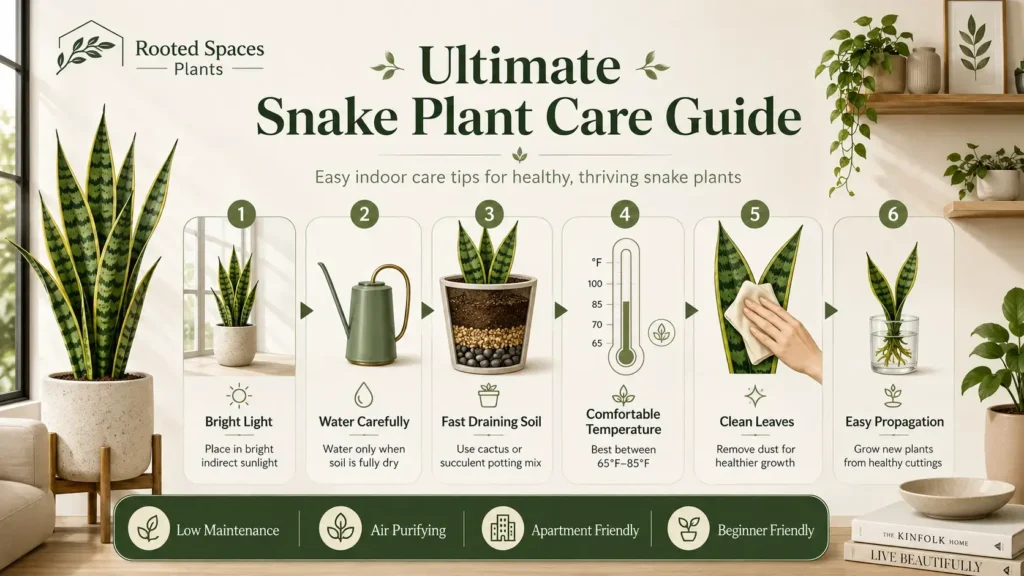
Best Light for Snake Plants
Snake plants grow best in bright indirect light. However, they can also survive in low light conditions.
Place your plant near:
- East-facing windows
- South-facing rooms
- Filtered sunlight areas
Avoid harsh afternoon sun for long periods. Too much direct sunlight may burn the leaves.
If you keep snake plants in offices, they usually adapt well to fluorescent lighting.
Snake Plant Watering Tips
Overwatering is the most common mistake people make.
Snake plant watering should stay minimal. The soil must dry fully before watering again.
In most American homes:
- Water every 2 to 3 weeks in summer
- Water once a month in winter
- Reduce watering in cooler climates
Always check the soil before adding water.
If the leaves become mushy or yellow, your plant may be getting too much water.
Best Soil for Snake Plants
Snake plants need fast-draining soil.
A cactus or succulent mix works best because it prevents root rot.
You can also improve drainage by adding:
- Perlite
- Sand
- Small bark pieces
Choose pots with drainage holes. Decorative pots without drainage often trap excess water.
Ideal Indoor Temperature
Snake plants prefer temperatures between 65°F and 85°F.
They do well in most indoor American homes because typical room temperatures fit this range naturally.
Keep plants away from:
- Cold drafts
- Heating vents
- Freezing windows
- Outdoor frost exposure
How to Care for a Snake Plant Year-Round
Snake plants are hardy, but seasonal care still matters.
Spring and Summer Care
This is the active growing season.
During warmer months:
- Water slightly more often
- Rotate the plant for even growth
- Wipe leaves clean
- Add light fertilizer once a month
Fall and Winter Care
Growth slows during colder months.
During winter:
- Reduce watering
- Skip fertilizer
- Keep away from freezing air
- Allow the soil to stay dry longer
This simple seasonal routine helps prevent common plant problems.
Common Snake Plant Problems
Even low-maintenance plants face issues sometimes.
Yellow Leaves
Usually caused by overwatering.
Solution: Let the soil dry completely before watering again.
Brown Tips
This often happens because of dry indoor air or inconsistent watering.
Trim damaged tips with clean scissors.
Soft or Mushy Roots
This is a sign of root rot.
Remove damaged roots and repot the plant in fresh, dry soil.
Create a Stylish Indoor Plant Setup
Snake plants pair beautifully with modern interiors. They work well with neutral furniture, wood textures, and minimalist décor.
If you want professional help creating a balanced indoor plant design for your home or workspace, explore our Plant Maintenance Services for personalized indoor greenery solutions.
You can also contact their team for ideas that match your space, lighting, and lifestyle.
Snake Plant Propagation Made Easy
One reason people love snake plants is how easy they are to grow from existing plants. You do not need special gardening skills or expensive tools.
If your plant is healthy, you can turn one plant into several new ones over time.
Propagation by Plant Division
This is the easiest method for beginners.
Start by removing the plant from the pot carefully. You will notice separate root sections underneath the soil. Gently pull these sections apart. Each section should have healthy roots and leaves attached.
Place them into separate pots with fresh soil and water lightly.
Many homeowners use this method when their snake plant becomes too large for one container.
Growing New Plants From Leaf Cuttings
You can also grow snake plants from leaf cuttings.
Cut one healthy leaf near the base. Then divide it into smaller pieces. Let the cut sections dry for about a day before planting.
After that, place them in water or lightly moist soil.
This method takes more time, but it is satisfying to watch new roots appear. Many indoor gardening enthusiasts enjoy this process because it feels rewarding and simple.
Best Places to Keep a Snake Plant Indoors
Snake plants work almost anywhere indoors, which makes them ideal for modern homes and apartments.
In the Bedroom
Many people keep snake plants in bedrooms because they create a calm and fresh atmosphere. Their tall leaves also add softness to empty corners without taking up much space.
A small plant near a bedside table can make the room feel more relaxing.
In the Home Office
Remote workers often add plants to workspaces to make them feel less stressed. A snake plant on the side of a desk or near a window adds life to the room without creating extra work.
Since snake plants need little attention, they are perfect for busy work schedules.
In Living Rooms
Snake plants blend easily with modern furniture and neutral color palettes. Interior designers often use them in living rooms because their shape adds height and texture.
They look especially good beside sofas, shelves, and console tables.
In Bathrooms
If your bathroom gets natural light, a snake plant can do well there, too. The humidity from showers usually does not bother the plant.
Simple Indoor Snake Plant Care Tips
A lot of plant problems happen because owners try to do too much. Snake plants prefer simple care.
Here are a few habits that help:
- Do not water on a fixed schedule
- Check the soil before watering
- Keep the plant near indirect light
- Use pots with drainage holes
- Remove dead leaves when needed
That is honestly enough for most snake plants to stay healthy.
Why Snake Plants Fit Busy Lifestyles
Not everyone has time for high-maintenance plants. That is why snake plants are common in apartments, offices, and rental homes across the USA.
People who travel often or work long hours usually want plants that can survive with little attention.
Snake plants handle missed watering better than most indoor plants. Even if you forget about them for a while, they usually recover quickly.
That reliability is a big reason they stay popular year after year.
Snake Plants and Indoor Wellness
Indoor plants can change how a room feels. Even a single plant can make a space feel warmer and more welcoming.
Snake plants are especially popular in wellness-focused homes because they bring greenery indoors without adding stress.
Some people place them in meditation corners, reading spaces, or near work desks to create a calmer atmosphere.
While plants cannot replace fresh outdoor air, they can still help indoor spaces feel more comfortable and connected to nature.
Decorating With Snake Plants
Snake plants fit almost every interior style.
In modern homes, people often use black or white pots for a clean look. In cozy or natural spaces, woven baskets and ceramic pots work beautifully.
Tall snake plants can fill awkward empty corners. Smaller varieties look great on shelves, side tables, and entryway stands.
Because they grow upward instead of outward, they work well in smaller apartments where floor space matters.
If you want help choosing plants that match your home style, lighting, and layout, explore Residential Plant Styling for personalized plant design ideas.
Common Snake Plant Mistakes
Snake plants are easy to care for, but a few mistakes can still cause problems.
Too Much Water
This is the most common issue.
If the soil stays wet for too long, roots can rot. Leaves may turn yellow or feel soft near the base.
When in doubt, wait a few more days before watering.
Very Dark Corners
Snake plants survive low light, but they still need some light to grow properly.
A room with no natural light at all may slow growth over time.
Dusty Leaves
Indoor dust collects on plant leaves faster than most people realize. Wiping the leaves gently every few weeks helps the plant look cleaner and healthier.
Why Snake Plants Continue to Grow in Popularity
People today want indoor plants that fit real life. They want something attractive, simple, and practical.
Snake plants check all those boxes.
They work well for:
- First-time plant owners
- Apartment residents
- Busy professionals
- Minimalist homes
- Office spaces
- Small living areas
That is why they continue to be one of the most recommended low-maintenance indoor plants in the USA.
Conclusion
This ultimate guide to snake plant care proves that keeping indoor plants does not have to feel difficult.
Snake plants are easy to manage, visually appealing, and adaptable to different lifestyles. Whether you want greenery for your bedroom, office, or living room, they offer a simple way to make indoor spaces feel fresher and more inviting.
With the right light, careful watering, and basic maintenance, a healthy snake plant can last for many years.
If you are planning to upgrade your home or office with professionally designed indoor greenery, contact Rooted Spaces to explore customized residential and commercial plant styling services.

Sanaz Haghshenas
Founder & Plant Specialist at Rooted Spaces
With years of hands-on experience working with live plants and interior spaces, Sanaz helps homeowners and businesses create environments that feel more welcoming, balanced, and connected to nature. Her approach combines practical plant expertise with thoughtful design to bring lasting greenery into modern homes and workspaces.
FAQs About Snake Plants
Most snake plants only need water every few weeks. Always check that the soil feels dry first.
Yes. Snake plants handle low light better than many indoor plants.
Absolutely. They are one of the easiest houseplants to maintain.
Yellow leaves usually mean the plant is getting too much water.
Yes. Snake plant propagation is simple through division or leaf cuttings.
Bright indirect light is best, but they also adapt to lower light areas.
Yes. They are popular office plants because they look clean and require very little care.