
Top 10 Indoor Climbing Plants for Homes & Offices in the USA – 2026
summary
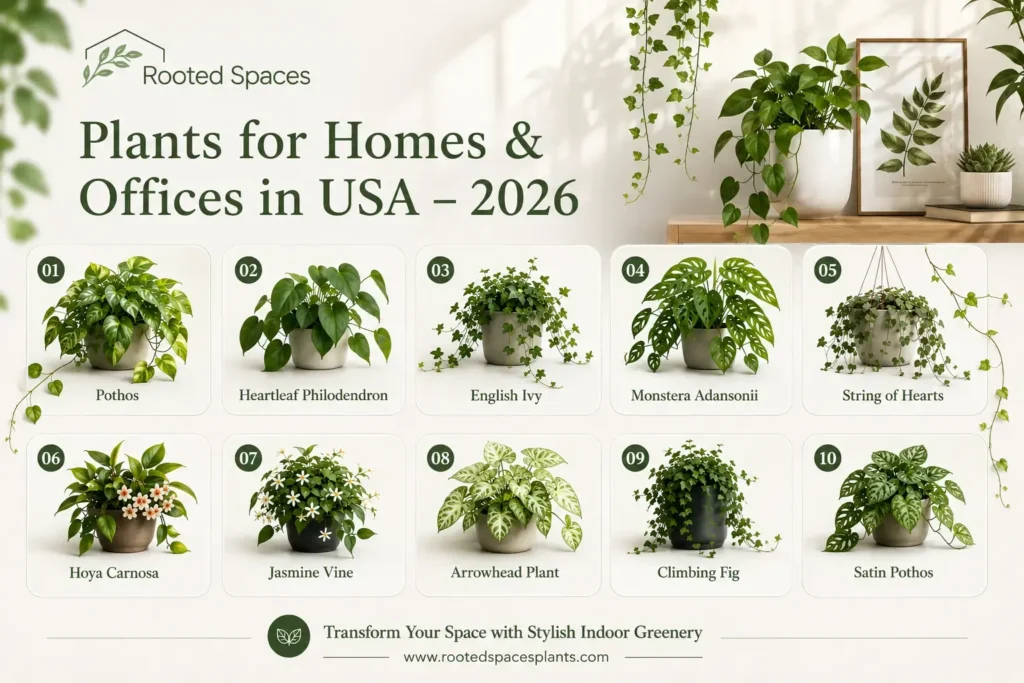
- Pothos: A low-maintenance indoor climbing plant known for its fast growth, trailing vines, and ability to thrive in low-light spaces. Perfect for homes and offices.
- Monstera Adansonii: Famous for its unique split leaves and tropical appearance, this plant adds a premium modern décor vibe to interiors.
- English Ivy: A classic indoor vine that creates elegant hanging greenery while helping improve indoor air quality.
- Heartleaf Philodendron: A stylish and beginner-friendly climbing plant with glossy heart-shaped leaves that grow beautifully on shelves or moss poles.
- String of Hearts: A delicate trailing vine with small patterned leaves, ideal for minimalist and modern indoor décor styling.
- Jasmine Vine: Adds natural beauty and a refreshing atmosphere with soft greenery and lightly fragrant flowers.
- Swiss Cheese Vine: A trendy climbing plant with decorative perforated leaves that enhances modern American interior aesthetics.
- Hoya Carnosa: A slow-growing indoor climber with thick waxy leaves, valued for its elegant appearance and easy maintenance.
- Creeping Fig: A dense climbing plant often used for vertical greenery walls and indoor decorative spaces.
- Arrowhead Plant: A versatile indoor climbing plant with vibrant foliage that adapts well to offices, apartments, and modern homes.
Walk into any modern apartment in Brooklyn or a creative office in Austin, and you will probably notice one thing straight away — plants are everywhere.
Not the old-fashioned, bulky plants sitting in forgotten corners. People now want greenery that feels natural, stylish, and easy to live with. That shift is exactly why indoor climbing plants are becoming such a huge part of home décor in 2026.
They do not take up much floor space. They soften plain walls. They make apartments feel calmer after long workdays. Even a small vine hanging near a window can completely change the mood of a room.
For people living in busy cities like Chicago, Seattle, or Los Angeles, that little connection to nature matters more than ever.
Some plant lovers build full indoor plant walls. Others simply let a vine trail from a bookshelf. There is no strict rule anymore. The goal is to make spaces feel comfortable and alive.
The best part is that many indoor climbers are surprisingly simple to maintain.
Need Help Choosing the Right Indoor Climbing Plant?
Why Indoor Climbing Plants Are So Popular Right Now
Modern homes are changing. Open layouts, neutral furniture, wooden textures, and natural light are shaping interior trends across the USA.
Plants fit naturally into that style.
But climbing plants offer something different compared to regular indoor pots. They add movement to a space. A trailing vine creates softness that furniture alone cannot achieve.
That is why interior designers across New York and San Francisco often use indoor creeper plants in apartments, cafés, and creative studios.
People also prefer them because they work well in smaller homes.
Instead of filling the floor with large planters, vines can grow upward, around shelves, or across hanging supports.
For apartment residents and remote workers, that makes a huge difference.
Things to Consider Before Buying Indoor Climbers
Not every plant suits every room.
Before choosing indoor climbing plants, think about these simple factors:
Lighting
Some plants love bright windows. Others survive happily in low light.
Maintenance
If you travel often or work long hours, low-maintenance indoor climbers are usually the better option.
Space
Small apartments need compact vines that stay manageable indoors.
Pets
A few indoor plants may not be pet-friendly, so always check before buying.
Choosing the right plant early saves both money and frustration later.
1. Pothos
Pothos is probably the plant most people start with, and honestly, there is a good reason for that.
It grows fast. It survives missed watering days. It still looks healthy even when beginners forget basic plant care.
That flexibility makes it one of the best indoor vine plants for homes and offices.
In apartments around Boston and Seattle, pothos is commonly used on floating shelves or hanging baskets because it grows beautifully without demanding too much attention.
Why people love pothos
- Handles lower light conditions
- Grows quickly indoors
- Looks good in modern spaces
- Easy for beginners
Best places to keep it
- Home office shelves
- Bedroom corners
- Kitchen windows
- Hanging planters
If you want greenery without stress, pothos is one of the safest choices available.
2. Heartleaf Philodendron
Some plants instantly make a room feel softer. Heartleaf Philodendron does exactly that.
Its vines grow gently over shelves and planters, giving interiors a relaxed and welcoming feel. Many workspace designers use this plant because it does not look overly formal or stiff.
It fits naturally into both homes and offices.
People living in cities like Dallas and Atlanta also prefer philodendrons because indoor heating and air conditioning rarely bother them much.
Why this plant works well indoors
The leaves stay attractive throughout the year, even with simple care.
You also do not need huge windows or expensive plant setups.
Simple care tips
- Water when the soil feels dry
- Keep near indirect sunlight
- Trim longer vines occasionally
For indoor gardening beginners, this plant feels far less intimidating than many trendy tropical plants online.
3. English Ivy
English Ivy has been around forever, but somehow it still feels stylish in 2026.
Its trailing vines create a classic look that works especially well in modern industrial interiors. That is one reason why many cafés and boutique offices in Chicago and Portland still use ivy as part of their décor.
It grows nicely in hanging baskets and can also climb small indoor supports.
Why English Ivy remains popular
- Adds texture to blank walls
- Works well in compact spaces
- Creates a timeless indoor look
- Suitable for vertical gardening indoors
Best styling ideas
Try placing ivy near bookshelves, metal frames, or wooden furniture for a more natural interior feel.
One thing to remember is airflow. Ivy prefers cooler indoor conditions compared to some tropical plants.
4. Monstera Adansonii
Monstera Adansonii became extremely popular after social media filled with modern plant-inspired interiors.
And honestly, it deserves the attention.
The unique holes in the leaves make the plant stand out immediately without looking too loud or overwhelming.
In bright apartments across Miami and Los Angeles, people often let this plant climb moss poles or trail naturally from shelves.
Why people choose this plant
- Unique leaf appearance
- Great for modern homes
- Fast growing indoor climber
- Perfect for statement corners
It works especially well in rooms with natural textures like wood, linen, or stone finishes.
If you are planning a more polished indoor greenery setup for your apartment or workspace, you can explore Residential Plant Services to know more about custom plant styling ideas for modern interiors.
5. String of Hearts
Not everyone wants large leafy plants taking over an entire room.
That is exactly why String of Hearts became popular among apartment residents and younger homeowners.
The vines stay delicate and lightweight, making them perfect for smaller interiors. Many people place them near windows, bookshelves, or hanging planters where the vines can fall naturally.
In smaller homes around Washington DC and San Diego, this plant fits beautifully without making rooms feel crowded.
Why people enjoy it
- Needs very little maintenance
- Great for compact spaces
- Stylish without looking heavy
- Works beautifully in hanging pots
It is also one of those rare plants that still looks elegant even with minimal styling around it.
6. Hoya Carnosa
Some plants demand attention every other day. Hoya is not one of them.
That is probably why so many busy homeowners have started choosing it lately. People working long office hours or balancing remote jobs usually want plants that still look good without constant care.
Hoya Carnosa does that well.
The leaves stay thick and glossy for most of the year, and the vines slowly stretch outward instead of growing wildly overnight. In smaller apartments around Seattle and Boston, that slower growth actually becomes a huge advantage.
You are not trimming it every weekend.
What makes Hoya different
A lot of indoor climbers look messy once they mature. Hoyas tend to keep a cleaner shape naturally.
That is one reason cafés and modern coworking spaces use them near shelves or seating corners.
Best spots indoors
- Hanging baskets near windows
- Wooden shelves
- Small office corners
- Bedroom side tables
Some plant owners also notice tiny flowers appearing after a while. They are small, but surprisingly beautiful.
7. Jasmine Vine
Most climbing plants improve how a room looks. Jasmine changes how a room feels.
The scent is soft, calming, and noticeable without becoming overpowering. After a long day, even a small jasmine vine near a window can make an apartment feel more peaceful.
That is part of the reason people in warmer cities like Miami and Houston still love growing it indoors.
Things people enjoy about jasmine
- Light natural fragrance
- Soft white flowers
- Relaxed atmosphere
- Elegant trailing vines
It does need sunlight though.
A dark room usually will not keep jasmine happy for very long. Bright windows work best, especially in apartments that receive morning light.
A simple styling idea
Instead of overcrowding the room with multiple plants, many interior designers use one healthy jasmine vine as a statement piece beside curtains or reading chairs.
That cleaner approach feels much more modern in 2026.
8. Arrowhead Plant
Arrowhead plants quietly fit into almost any room.
They are not flashy. They do not demand attention. But once they begin growing longer vines, the whole plant starts adding softness to shelves, desks, and corners.
A lot of apartment residents choose Arrowhead plants because they stay manageable indoors.
In places like Denver and Washington DC, where apartment layouts can feel compact, smaller indoor climbers usually work better than oversized tropical plants.
Why beginners usually like them
- Easy to manage indoors
- Handles indoor temperatures well
- Attractive leaf shapes
- Does not need complicated care
Care feels pretty straightforward
Keep the soil lightly moist and avoid placing it under harsh afternoon sunlight.
That alone is usually enough for healthy growth.
9. Climbing Fig
Climbing Fig feels very different compared to softer trailing vines.
Instead of gently hanging downward, it spreads tightly across surfaces and creates a dense green texture. When styled correctly, it almost turns plain walls into living décor.
That is exactly why designers in cities like New York and San Francisco often use it in modern interiors.
It works especially well in spaces that feel too plain or cold.
Why people choose Climbing Fig
- Creates natural wall coverage
- Works beautifully for vertical gardening
- Adds texture to minimal interiors
- Makes rooms feel more organic
One thing worth knowing early — it grows faster than many people expect indoors.
Without trimming, it can start looking uneven after some time.
Still, for homeowners wanting something dramatic without filling floors with large pots, it is a great option.
If you are planning a full indoor greenery setup instead of adding random plants one by one, you can explore Rooted Spaces Plants Residential Plant Styling for ideas and professional indoor plant styling support.
10. Satin Pothos
Satin Pothos has a quieter look compared to brighter tropical plants.
The silver markings across the leaves catch light gently, which makes the plant feel more relaxed and modern. That subtle appearance works really well in homes using neutral colors, wooden furniture, or minimalist décor.
A lot of younger homeowners and remote workers now prefer plants like this because they blend naturally into a room instead of dominating it.
Why Satin Pothos keeps getting popular
- Easy indoor care
- Elegant leaf texture
- Works in compact apartments
- Fits modern décor trends
Where it usually looks best
- Floating shelves
- Hanging planters
- Workspace corners
- Bedroom windows
Even a small plant can soften an entire space once the vines begin trailing naturally.
Choosing the Right Indoor Climber for Your Space
A beautiful plant still becomes frustrating if it does not suit your lifestyle.
That is why lighting, space, and maintenance matter more than trends.
If your room gets lower light
These usually perform better indoors:
- Pothos
- Satin Pothos
- Philodendron
If your apartment receives strong sunlight
You will likely have better success with:
- Jasmine Vine
- Monstera Adansonii
- Hoya Carnosa
For smaller apartments
Compact vines often feel easier to manage:
- String of Hearts
- Arrowhead Plant
- Pothos
The goal is not filling every corner with greenery.
Sometimes one healthy climbing plant creates a better atmosphere than ten overcrowded pots.
Plant Styling Ideas People Are Loving in 2026
Interior trends have shifted a lot recently.
Homes no longer need huge amounts of décor to feel stylish. People now prefer cleaner spaces with softer natural elements.
That is where indoor climbing plants fit perfectly.
Shelf vines
Trailing greenery around bookshelves makes rooms feel more relaxed without adding clutter.
Vertical greenery
Indoor wall climbing plants are becoming common in apartments with limited floor space.
Desk greenery
Remote workers often place smaller vines near workstations because they make long workdays feel less dull.
Natural material pairings
Plants beside wood, linen, ceramic, and stone textures remain one of the strongest interior trends this year.
If you are unsure how to style indoor plants properly in your apartment or office, speaking with indoor plant styling professionals can help you avoid overcrowding and poor placement choices.
Conclusion
Indoor climbing plants are no longer just decoration.
For many people, they make homes feel calmer, warmer, and easier to enjoy after busy days. Even offices feel less cold once natural greenery becomes part of the space.
That is why more homeowners, apartment residents, and workspace designers across the USA continue adding vines and indoor climbers into modern interiors.
The good thing is you do not need a huge home or advanced gardening experience to start.
Even one healthy vine near a shelf or sunny window can completely shift the mood of a room.

Sanaz Haghshenas
Founder & Plant Specialist at Rooted Spaces
With years of hands-on experience working with live plants and interior spaces, Sanaz helps homeowners and businesses create environments that feel more welcoming, balanced, and connected to nature. Her approach combines practical plant expertise with thoughtful design to bring lasting greenery into modern homes and workspaces.
FAQs
Pothos, Heartleaf Philodendron, and Arrowhead Plant are usually the easiest options to start with. They adapt well indoors and do not need complicated care routines.
Plants like Pothos, Satin Pothos, and Philodendron can handle lower indoor lighting better than many other climbing plants.
Yes. Many indoor climbers grow vertically or trail downward, which makes them perfect for smaller apartments with limited floor space.
Hoya Carnosa, English Ivy, and Pothos are popular office climbing plants because they stay manageable and look clean in work environments.
Most indoor vine plants prefer watering once the top layer of soil feels dry. Overwatering usually causes more problems than underwatering.
Absolutely. Indoor creeper plants help soften plain walls, add texture to interiors, and make rooms feel more welcoming and natural.
Most indoor climbing plants prefer bright indirect sunlight rather than harsh direct sun. Too much direct sunlight can damage leaves in some varieties.
Monstera Adansonii, Satin Pothos, and String of Hearts are among the most popular stylish indoor plants for modern homes this year.
Yes. Many decorative indoor climbers grow upward or trail neatly from shelves, making them ideal for compact homes and studio apartments.
Instead of overcrowding rooms, try placing one or two healthy vines near shelves, windows, or hanging planters for a cleaner and more balanced look.